
Giving organizations the culture, capability, and confidence to sustain what they build.









Most organizations treat performance problems as people problems or process problems. They hire, reorganize, or install new frameworks. The results don't last. The root cause is neither talent nor tools. It's the operating system underneath: how decisions get made, who owns what, how teams stay aligned when things get complicated.
When those conditions are unclear, even strong teams lose momentum. And the senior people who should be focused on the hardest problems spend their time compensating for gaps that everyone can feel but nobody has named.

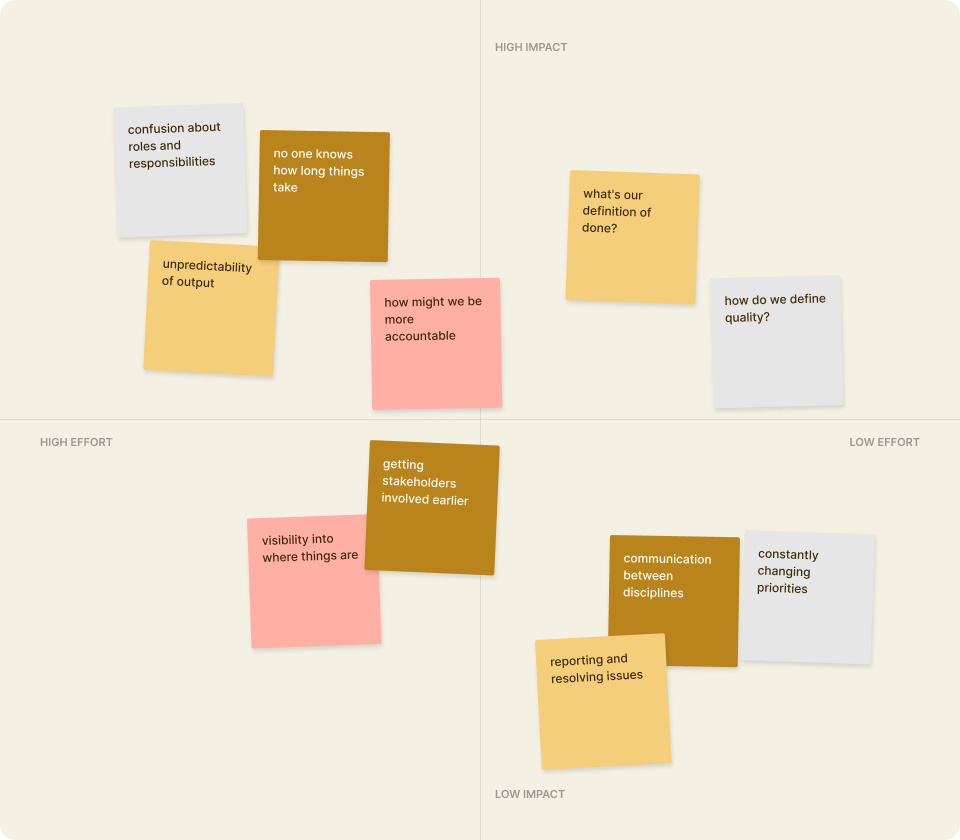
There are a handful of patterns we commonly hear from product and technology leaders, whether a team is moving fast without shared systems or has struggled trying to build them.
Product Practice is made for the pragmatic few, ready to fix the operating system beneath.

Want to see what organizational dysfunction is costing your team?
Start with this calculator that hits the five predictable cost areas.
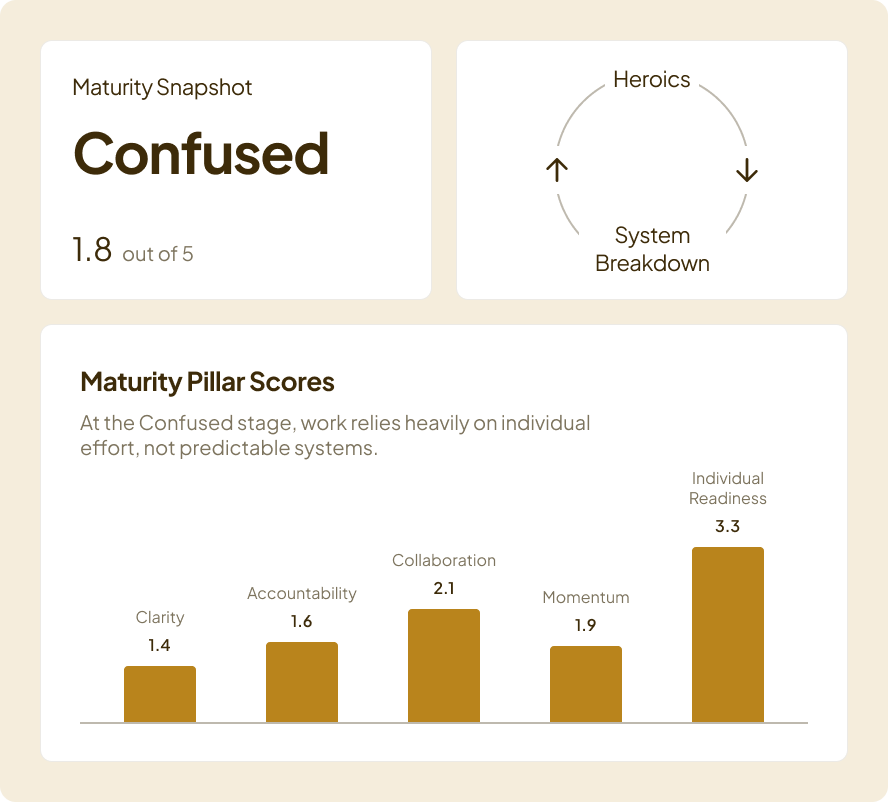
Reveal how teams work today and where friction is limiting effectiveness. Structured diagnostic over 4-6 weeks: surveys, interviews, observation. The output is shared language for the friction your teams already feel but haven't been able to name.
Co-create the specific structures that address your highest-priority friction. Not a report handed over. Decisions made together that the team understands, helped build, and is prepared to sustain. The form depends on what Assess surfaces: decision rights, meeting rhythms, ownership models, cross-functional protocols. Built with the people who will use them. That's what makes them last.
Sustain new ways of working through consistent reinforcement in real contexts. This is where new habits replace old heroics. The goal is your team's independence, not a dependency on us.



.avif)
Tucker leads Crema's Product Practice. His work centers on the human dynamics of product development: unclear ownership, difficult conversations, stalled momentum. He's been working on product teams since 2014, and his core belief is that the hardest problems in product aren't about the product. They're about the people building it.
Book time with TuckerCrema’s consultants are the same product managers, designers, and engineers who work on client engagements, so they bring real-world experience. Our training content evolves constantly based on what we learn from current client work, ensuring you get the most relevant and practical guidance. When we teach techniques for user research, sprint planning, or stakeholder communication, we're sharing methods we've refined through hundreds of client engagements, not academic frameworks that sound good but fall apart in practice.
Product Practice differs from an HR initiative in its specific focus on evaluating and enhancing the performance of product development teams. While HR initiatives broadly address employee management, recruitment, training, and overall workforce development across the entire organization, this work zeroes in on the composition, workflows, methodologies, and performance metrics of product teams and organizations.
This service is adapted to your specific context rather than applying a one-size-fits-all approach. For smaller teams, we focus on establishing foundational practices that prevent common scaling challenges. Larger teams typically need more sophisticated coordination and clearer role definition. Factors like your organization's industry, growth stage, technical complexity, and existing cultural norms are weighed when crafting recommendations. Remote, hybrid, and co-located teams also have distinct needs that we address as well.
This kind of engagement only realizes full value if we hold the client accountable to the commitments they made throughout this engagement. Thus, we must make sure that we help the customer succeed even post-engagement. Most all engagements include a package of accountability communications where we check-in with your team at regular intervals to ensure they're tracking toward their agreed upon goals. We ask what's getting in their way if something isn't being completed and pass that information along to the -suite.
Most first engagements run four to six weeks and land between $25-45k. Where you start in that range depends on how clearly the problem's already been named. A team that comes in with a well-defined issue and clear access to the right stakeholders moves faster and costs less than a team that spends the first few weeks figuring out what's actually broken. We scope the exact number after an initial conversation, once we know what we're working with.